
The lawn that looks easiest on paper may not be the easiest fit for your yard. When comparing artificial grass vs natural grass, less mowing and watering can come with trade-offs around heat, comfort and the living environment. There isn’t one right answer for every home.
If you’re weighing less routine upkeep against the feel and changing needs of a natural lawn, start with how you use the space. Artificial grass can suit busy areas where you want a consistent surface, but it may get hot in direct sun. Natural grass needs ongoing care and water, yet it brings living greenery to the yard.
This guide compares upkeep, comfort, water use, wildlife considerations and everyday use. You’ll also find practical points to consider before planning a turf project, including your yard’s conditions and how you want to use the space. The aim isn’t to crown a winner, but to help you choose a lawn that fits your routine and priorities.
Key Takeaways
- There’s no universal winner in the artificial grass vs natural grass choice; your yard’s use and your priorities should guide the decision.
- Compare water needs, surface heat, soil effects and wildlife considerations alongside the look and feel you want.
- Separate the work involved in getting a lawn established from the time and care it may need over the years.
- Rank what matters most, from natural variation and feel to lower upkeep and a more consistent appearance.
- Turn your preferred surface, main priorities and intended use into a clear brief before planning installation.
Artificial Grass vs Natural Grass: What Changes in Everyday Use?
Neither lawn type suits every yard or household. Natural grass is a living lawn that grows in soil and responds to its surroundings. Artificial grass is a manufactured surface designed to resemble grass. Compare how each works in daily life rather than assuming one is right for every home.
What artificial grass and natural grass are
Natural grass grows; synthetic turf is made. Living grass develops roots in soil and changes with rainfall, sunlight, temperature and wear. It may grow quickly in favourable conditions, slow down in others, or become patchy where shade or heavy foot traffic affects it.
Artificial grass has synthetic fibres arranged to create a grass-like surface. It doesn’t grow or respond to the weather as a living lawn does, and its appearance and feel depend on the turf and how it’s installed. The overview of Artificial turf explains its history, uses and environmental considerations. In everyday terms, one is a growing plant; the other is a manufactured lawn surface.
What changes in the weekly routine
With natural grass, the routine follows its growth and condition. You may need to mow as it grows, water during dry spells or while a new lawn establishes, and feed it depending on the lawn and soil. The workload varies with climate, shade, soil, grass condition and how often people use the lawn.
Artificial grass removes mowing and feeding from the routine, but it isn’t completely maintenance-free. Leaves and other debris can collect on the surface. Dust, spills or pet use may call for cleaning, and regular foot traffic can flatten fibres that benefit from brushing. How often you do these jobs depends on what lands on the lawn and how much it’s used.
- Natural grass: allow time for growth-related jobs such as mowing, and consider watering or feeding when conditions and lawn health call for it.
- Artificial grass: plan for occasional clearing, cleaning and brushing rather than growth-related care.
That difference shapes a normal week. A household that enjoys gardening may see mowing as part of caring for a living lawn. Someone short on time may prefer fewer growth-related tasks, while still setting aside time to keep a synthetic surface tidy. Neither option removes every job; it changes what those jobs involve.
So, the practical question behind artificial grass vs natural grass isn’t simply which needs less attention. It’s which routine you’re more comfortable fitting around work, family and the way you use your yard. That’s a useful starting point for weighing the other trade-offs.
How Artificial and Natural Grass Differ in Australian Conditions
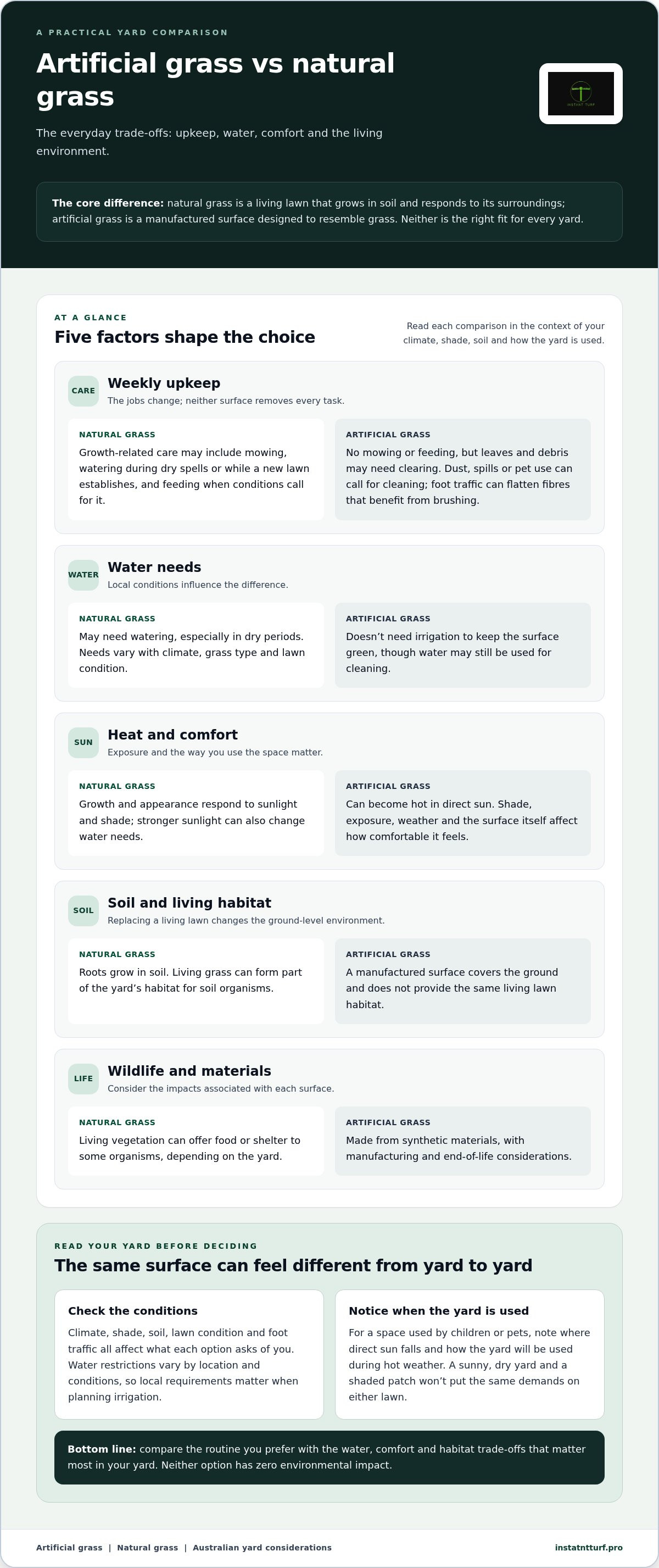
Australian conditions can shift the balance. A sunny, dry yard, a shaded patch and a lawn used daily by kids or pets won’t put the same demands on either surface. Use the comparison below as a guide, not a fixed verdict. Climate, shade, soil, lawn condition and household use all affect the result.
| Factor | Natural grass | Artificial grass |
|---|---|---|
| Water | May need watering, especially in dry periods; needs vary with climate, grass type and lawn condition. | Doesn’t need irrigation to keep the surface green, though water may still be used for cleaning. |
| Soil and living ecosystems | Roots grow in soil, where living grass can form part of the yard’s habitat for soil organisms. | Covers the ground with a manufactured surface, so it doesn’t provide the same living lawn habitat. |
| Heat and sunlight | Growth and appearance respond to sunlight, shade and local conditions. | Can become hot in direct sun; shade and exposure affect how comfortable it feels. |
| Wildlife and materials | Living vegetation can offer food or shelter to some organisms, depending on the yard. | Made from synthetic materials, with manufacturing and end-of-life considerations. |
Water, soil and living ecosystems
A natural lawn’s water needs aren’t the same across Australia. A grass type that copes well in one climate may need more support in another, and a sunny, exposed lawn can behave differently from a shaded one. The Bureau of Meteorology notes that water restrictions vary by location and conditions, so check the requirements that apply to your area when planning irrigation.
Living grass grows in soil and can support organisms that rely on soil and vegetation. Replacing it with a manufactured surface changes that relationship. Artificial grass can reduce the need to irrigate the lawn itself, but water savings depend on what the natural lawn would otherwise require and how the yard is used.
The National Center for Health Research reports that artificial turf fields can shed infill materials into the environment; field findings shouldn’t be treated as a direct measure of residential lawns.
Neither choice has zero environmental impact. A living lawn uses water and care, while synthetic turf involves manufactured materials and eventual disposal. Consider which impacts matter most for your yard rather than treating either surface as impact-free.
Heat, sunlight and comfort
In direct Australian sun, synthetic surfaces can retain heat, but the experience depends on exposure, weather and the surface itself. A shaded area may feel different from an open lawn at the same time of day. If children or pets use the yard, note when the space gets direct sun and how you’ll use it during hot weather.
Natural grass also responds to light, but in a different way. Too little sun can affect its growth and appearance, while stronger sunlight can change its water needs. Before settling on either option, look at where shade falls across your yard and whether the surface needs to stay usable through the hottest part of the day.
Artificial grass installation and instant lawn installation each need to suit the space. A clear picture of your yard’s sun, shade and intended use can help shape a practical project brief and a tailored lawn installation quote.
The Trade-Offs: Upkeep, Appearance and Long-Term Use
The decision isn’t just about what the lawn looks like on installation day. Think about the work needed to establish the surface, the jobs that will return each week or season, and how you want the yard to look after regular use. Those trade-offs vary with lawn size, existing condition and household expectations.
Time, upkeep and running considerations
Natural grass asks for ongoing attention as it grows. Mowing is part of the routine, and watering or seasonal care may be needed to keep the lawn in the condition you want. A small patch that grows slowly can take little time, while a larger, fast-growing lawn can mean more regular work.
Synthetic turf shifts the routine rather than removing it. You may need to clear leaves, clean spills or brush areas that see frequent foot traffic. A busy family yard may need more attention than a little-used courtyard. Be realistic about your own standards, too: some households are happy with seasonal tidying, while others want a consistently neat finish.
Consider the project and the years after it separately. Either surface may need preparation before installation, while natural grass also needs time and care to establish. Artificial grass can reduce growth-related jobs, but cleaning and repairs remain part of ownership. Compare the work and resources involved in installation with the ongoing demands you’d otherwise manage, rather than judging by the initial project alone.
Appearance, feel and resilience
A natural lawn changes with its conditions. Colour and growth can vary across sunny and shaded spots, and wear may leave thin or bare patches. That variation is part of a living surface. Depending on the cause and conditions, some damage may be addressed by tending or re-establishing the affected area.
Artificial grass offers a more even look across the yard, which can suit people who prefer a consistent finish. But regular use can flatten fibres or make worn areas more noticeable. Repairs may be needed if the surface is damaged. Neither lawn type is indestructible: resilience depends on the grass or turf material, the quality of installation, how heavily the area is used and the care it receives.
- Choose natural grass if you value a living surface and are comfortable with seasonal changes and growth-related care.
- Consider artificial grass if a more consistent appearance and fewer mowing jobs matter more, while allowing for cleaning and possible repairs.
Before deciding, picture the everyday experience: bare feet on the lawn, kids playing, pets crossing the same route, or a tidy view from the kitchen window. The best fit in the artificial grass vs natural grass comparison is the one whose look, feel and upkeep suit how you actually use the space.
How to Choose Between Artificial Grass and Natural Grass
A useful choice starts with the life your yard needs to handle, not a single headline benefit. Use this framework to compare artificial grass and natural grass against your household’s routine and preferences. It helps you weigh the options before planning installation.
- Start with how you use the yard. Note who spends time there, what they do and how often. A lawn used mainly as a green outlook has different demands from one crossed daily by children, pets or visitors. Mark the busiest routes and play areas. Frequent foot traffic can affect how either surface wears, so consider what upkeep or visible wear you’d be comfortable with.
- Look at sun and shade across the space. Notice which parts get direct sunlight and which sit in shade for much of the day. These patterns can influence natural grass growth and water needs. Sun exposure also matters for synthetic turf comfort, especially if people use the yard during hot weather. Think about the times of day you’re most likely to be outside.
- Rank your priorities. Put upkeep, natural feel, living greenery and soil, water use, surface comfort and visual consistency in order of importance. Be specific: would you rather accept mowing to keep a living lawn, or occasional cleaning and a manufactured surface? Do you value natural variation, or prefer the lawn to look more uniform?
- Name the compromises you’ll accept. Every option involves trade-offs. You might accept seasonal changes in a natural lawn because you value its living character. Or you might accept cleaning and potential wear on synthetic turf to reduce growth-related jobs. Write down the one or two compromises that would bother you most; they can be more revealing than a long list of advantages.
Now match your priorities to the space. If living greenery and a natural feel rank highest, and you’re comfortable with the care that comes with growth, natural grass may align better. If fewer mowing tasks and a consistent appearance matter more, artificial grass may suit your preferences, provided you’re comfortable with its feel, heat exposure and occasional cleaning. Neither choice is automatically best for a high-traffic yard; the key is whether its trade-offs work for the people using it.
For a final sense-check, imagine an ordinary week in each scenario. Picture the time you’d spend on care, how the surface would feel underfoot, and whether its appearance would meet your expectations as conditions change. If your top priorities point in different directions, decide which one is essential and which one you can be flexible about. That makes the artificial grass vs natural grass decision clearer without treating one surface as a universal winner.
Once your priorities are clear, explore artificial grass installation options and discuss a tailored project quote.
Plan Your Artificial Grass or Natural Lawn Project with Confidence
Once you’ve weighed the trade-offs, turn your choice into a simple project brief. Note the surface you prefer, what the yard needs to handle and which compromises you’re comfortable with. This keeps the next conversation focused on your household rather than a generic lawn checklist.
Turn your comparison into a clear project brief
Keep the brief practical. Describe how you use the yard, the look you want and how much regular upkeep you’re prepared to take on. Add the conditions that influenced your decision, such as sunny or shaded areas and spots that get frequent foot traffic. You don’t need technical details yet. A clear picture of your priorities is enough to start planning.
- Preferred surface: artificial grass or an instant natural lawn.
- Main use: relaxing, play, pets, entertaining or mostly enjoying the view.
- Preferred look and feel: a consistent finish or the natural variation of living grass.
- Acceptable upkeep: the routine jobs you’re willing to manage.
- Yard conditions: notable sun, shade and high-use areas.
Be honest about the compromise that matters most. If you want a living lawn, include the care you’re willing to give it. If you’re leaning towards synthetic turf, say what you expect from its appearance and how you’ll use the surface. This brief captures the priorities behind your artificial grass vs natural grass decision and gives the installation discussion a clear starting point.
What to expect from an INSTATNT TURF quote
When you’re ready to consider installation, INSTATNT TURF designs and installs artificial grass and instant lawns, with flexible turf packages for different projects. You’ll receive a free fixed quote with no obligation or upsells, so you can review the project cost before deciding whether to proceed. The team can use your intended yard use and preferences to guide the project discussion.
INSTATNT TURF also provides a lifetime workmanship guarantee. Most lawns are installed within one to two days after approval. These details can help you understand the next step. Choose the lawn type that best fits your priorities, then consider the installation that brings that choice to life.
Your project brief doesn’t need to be perfect. Start with the surface you prefer, how you’ll use the yard and the conditions that shaped your choice. A tailored quote can put the installation details into clearer view, without pressure to proceed.
Request a free, fixed quote with no obligation
Take the Next Step Towards a Lawn That Fits
Your yard doesn’t need to meet someone else’s idea of the perfect lawn. It needs to work for the people who use it and the time you want to spend caring for it. Let your priorities settle the artificial grass vs natural grass decision, then turn that choice into a clear plan for your space.
If artificial grass or an instant lawn feels like the right fit, INSTATNT TURF can design and install it around your yard and intended use. You’ll receive a free fixed quote with no obligation or upsells, backed by a lifetime workmanship guarantee. Most lawns are installed within one to two days after approval, so you can understand the next step before deciding.
Start with the lawn you want and what matters most to your household. Request a free, fixed quote with no obligation and take a practical step towards a yard that feels right for you.
Frequently Asked Questions
Is artificial grass recyclable in Australia?
Some artificial grass may be recyclable, but the options depend on its materials and available processing facilities. There isn’t one household recycling route for every turf product in Australia, and kerbside bins aren’t a safe assumption. Before removing an old lawn, check its manufacturer information and current local council guidance. If those sources don’t identify a suitable recycling pathway, don’t treat the material as recyclable by default.
Can weeds grow through artificial grass?
Yes, weeds can still appear around artificial grass, especially along edges or in leaves and other debris that collect on top. For example, a seed caught in surface litter may sprout if conditions suit it. Preparing the base properly can reduce some opportunities for growth, but it can’t guarantee a weed-free yard. Check edges and clear debris as part of keeping the area tidy.
Does artificial grass need sunlight to stay green?
No. Artificial grass doesn’t need sunlight to stay green, though the way its colour appears can vary with the light and surrounding conditions. Natural grass needs suitable light to grow well, so a narrow, heavily shaded side passage may be harder to keep green than an open patch. If comparing options, consider how the area looks at different times of day, not just in full sun.
Can artificial grass be installed on a sloping yard?
It may be possible, but suitability depends on the slope, ground conditions, intended use and site preparation. A steep or uneven area used by children, for example, may need different planning from a gentle slope that’s mainly decorative. There isn’t a single slope limit that suits every yard. The design needs to account for the actual ground and how people will use the surface.
What happens if artificial grass is installed around established trees?
The layout should account for the tree’s ongoing need for soil, water and room to grow. Covering too much of the root area may change conditions around it, while growing roots can affect the nearby surface. The right arrangement depends on the tree and the yard, so don’t rely on one universal clearance distance. Include established trees in the project plan before deciding where the lawn should go.
Is artificial grass suitable for a balcony?
It may suit some balconies, but the surface, drainage, weather exposure and intended use all matter. A balcony differs from a garden because the existing floor and drainage need to be considered before adding a surface covering. For example, a small decorative space has different demands from one used regularly for outdoor dining. Don’t assume any turf can be laid over any balcony floor without planning for those conditions.
