

The most important part of synthetic lawn installation often happens before the grass arrives. A good plan starts with how you use your yard and what the site needs, not just the look of the turf.
If you’re weighing up less lawn upkeep, it’s reasonable to wonder whether synthetic grass will suit your household, how much preparation the yard needs and what installation could mean for drainage and daily routines. These details can make the difference between a lawn that looks good and one that works well for your space.
This guide explains the main stages of installation and the practical questions to consider before work begins. You’ll learn how site preparation, ground levels, drainage and household use shape the plan, plus what to expect from the installation process. Most lawns are installed within one to two days after approval, though timing depends on the project. By the end, you’ll have a clearer picture of whether synthetic grass fits your outdoor space and what a straightforward next step could look like.
Key Takeaways
- See how synthetic lawn installation progresses from an initial site assessment to a finished surface.
- Compare the practical needs of low-use, family and entertaining areas before settling on a lawn plan.
- Identify how foot traffic, shade, ground conditions and yard boundaries can affect the project.
- Make a short list of the space’s intended uses, preferred lawn area and features to retain before work begins.
- Learn how INSTATNT TURF’s design-and-install service and free fixed quote can help you understand the project without obligation or upsells.
What synthetic lawn installation involves and what it can change
Synthetic lawn installation is the fitting of artificial grass over an outdoor surface prepared for the job. The grass is only the visible finish. The existing ground, intended use, edges and drainage all influence how the finished area looks and performs. A level, tidy result depends on the site, the materials selected and the quality of the workmanship, so there isn’t one solution that suits every yard.
In practical terms, installation changes the surface of an outdoor space. Patchy or worn areas can become a more consistently green-looking place to relax or play, without the regular mowing associated with natural grass. That doesn’t mean the area needs no care. Leaves and debris can still collect, and the surface should suit the way your household uses it.
Artificial turf has a broader history and range of uses beyond residential yards. For a wider history and overview of artificial turf, including its composition and environmental considerations, see Wikipedia’s overview. For a home project, the useful starting point is simpler: decide what the area needs to do, then consider whether an artificial surface fits the site and your expectations.
Synthetic lawn and instant turf are different choices
Synthetic lawn is artificial grass. Instant turf is living natural grass supplied in rolls or pieces for laying over prepared ground. They’re different types of installation, so be clear about which surface you’re considering. This guide focuses on fitting synthetic lawn, rather than planting or laying a living lawn.
The distinction matters when planning the finished space. Think about the surface you want and how you expect to use it, rather than treating “turf” as one general option. INSTATNT TURF designs and installs synthetic lawns as a complete project, not as turf supply only.
Why homeowners consider a synthetic lawn
A bare patch under a clothesline, worn ground where people gather or a lawn that never looks even can make an outdoor area feel unfinished. Some homeowners also want to spend less time on routine lawn upkeep. Synthetic grass may suit these goals, but appearance and performance still depend on whether the site and selected materials fit the intended use.
In plain English, synthetic lawn installation means preparing an outdoor area and fitting artificial grass to create a finished surface for the way you want to use it.
Before settling on the idea, picture an ordinary week in the yard. Will children play there? Is it mainly a spot to sit, or does everyone cross it to reach another part of the garden? Consider these practical questions:
- Use: Match the planned area to how people will move, sit or play on it.
- Site: Existing ground, shade and boundaries can affect the design and finished appearance.
- Upkeep: Consider whether a consistently green-looking surface and less routine lawn work are worth the change for your household.
This simple check keeps the decision grounded. A good outcome is not just grass that looks tidy on installation day. It’s a surface that makes sense for the space and the people who use it.
How a synthetic lawn installation moves from site assessment to finished surface
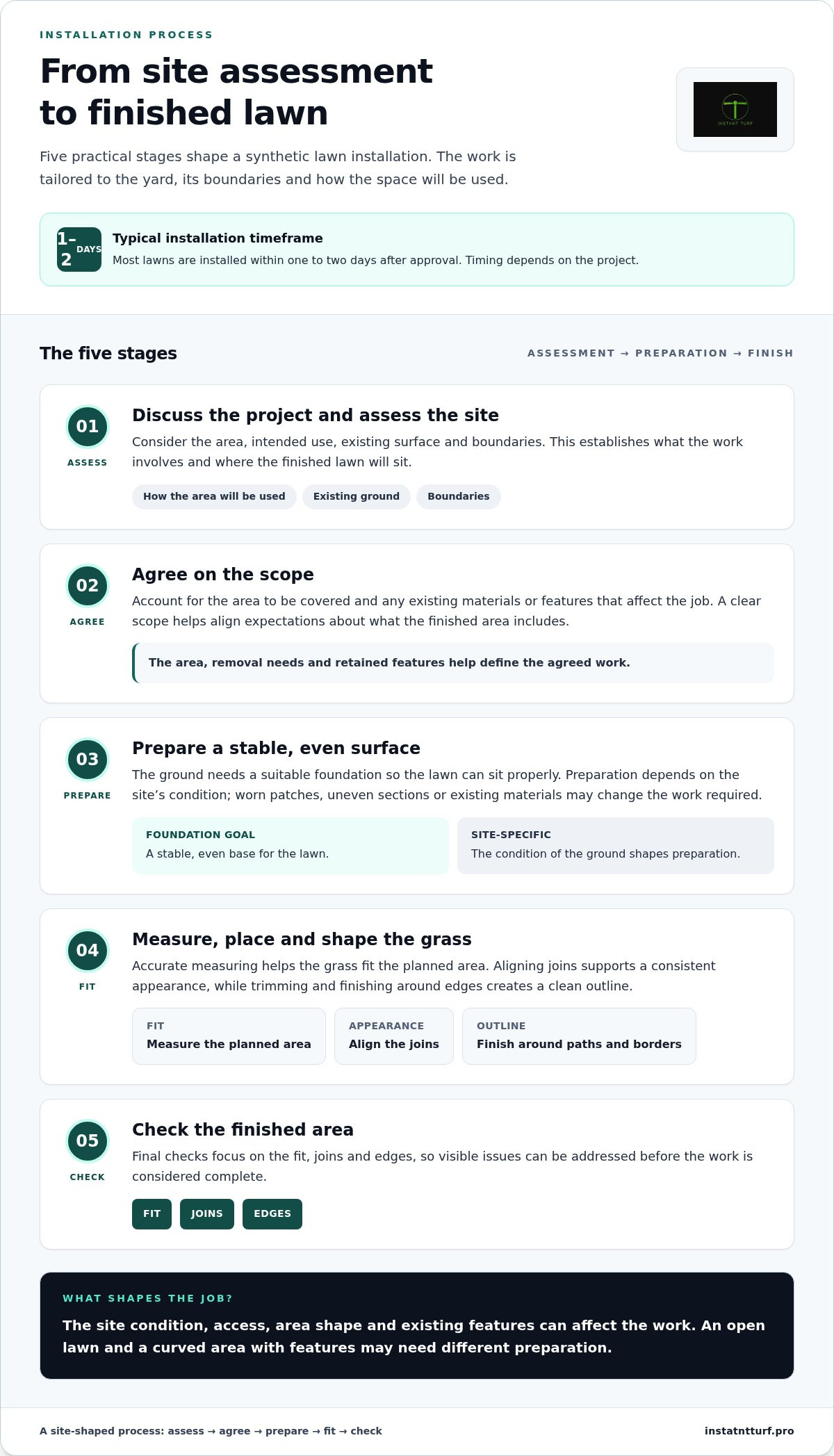
A professional synthetic lawn installation follows a clear sequence, but the work is shaped by the yard in front of the team. An open lawn and a curved area with existing features won’t need identical preparation. The aim is to agree on the scope, prepare the surface for the job, then finish the lawn so it sits neatly within its boundaries.
The main stages of professional installation
Each stage has a practical purpose. Assessment identifies what the site needs; preparation creates a suitable foundation; and careful placement and finishing help the lawn look tidy and work as intended.
- Discuss the project and assess the site. The area, intended use, existing surface and boundaries are considered. This helps establish what the work involves and where the finished lawn will sit.
- Agree on the scope. The area to be covered and any existing materials or features that affect the job are accounted for. A clear scope helps avoid different expectations about what the finished area includes.
- Prepare the surface. The ground needs a stable, even base so the lawn can sit properly. A sound foundation helps reduce the chance of an uneven-looking finish and supports the surface during regular use. Preparation depends on the condition of the site.
- Measure, place and shape the grass. Accurate measuring helps the grass fit the planned area. Well-aligned joins create a more consistent appearance, while trimming and finishing around edges, paths or garden borders gives the lawn a clean outline.
- Check the finished area. Final checks focus on the fit, joins and edges so visible issues can be addressed before the work is considered complete.
In short, the team assesses the site, agrees on the scope, prepares the base, fits the grass and checks the finish. The exact work is shaped by the yard.
What can affect the work on installation day
The surface condition is one factor. A clear area may need different preparation from ground with worn patches, uneven sections or existing materials to remove. If old lawn or another surface needs to come out, that removal can add to the work and affect the agreed scope.
Access matters too. The route from the entry point to the lawn, obstacles in the yard and the shape of the area can influence how materials and equipment reach the work zone. Curves, narrow strips and multiple edges call for careful measuring and trimming. A broad, simple shape may be more straightforward to lay, but still needs accurate placement and neat edge finishing.
Most lawns installed by INSTATNT TURF take one to two days after approval. This is a guide, not a promise that every site takes the same time. The project scope and site conditions matter. A free fixed quote with no obligation or upsells gives you a clear way to understand the proposed work. You can request a fixed synthetic lawn quote when you’re ready to explore your project.
Which yard conditions and uses matter when planning synthetic lawn
Start with the life the lawn needs to fit. A side yard used mainly for appearance has different planning needs from a family area crossed throughout the day or a space where people gather around outdoor furniture. Thinking through regular activities gives the installation a practical purpose and helps define which parts of the yard to include.
Match the project to how the space will be used
Consider how often people will walk across the area, where they tend to stop and whether furniture or play equipment usually sits there. Occasional foot traffic may call for a different layout from a household lawn used throughout the day. These are planning considerations, not guarantees of how a particular surface will perform. Product choice matters too, but it should follow the needs of the space rather than lead the decision.
Use this comparison to sketch out your priorities:
| Area use | Practical planning needs |
|---|---|
| Low-use or decorative | Focus on the visible area, its borders and how it meets nearby garden beds or paving. |
| Family area | Think about where people walk and gather, and how much of the lawn is regularly in use. |
| Entertaining area | Map out furniture, access routes and the space needed to move comfortably around seating. |
Be specific about the activities. “We use the yard a lot” is less helpful than noting that people cut across it to reach the shed, children play in one corner or chairs are moved around for weekend meals. Those details help clarify the area and layout you want. They don’t guarantee a particular outcome for children, pets or sport, since suitability depends on the site and materials as well as the intended use.
Read the site before settling on the layout
A site assessment matters because the ground, shade, water movement and boundaries shape how the lawn can be planned and finished. Look for slopes, low points, garden edges and fixed structures such as steps, sheds or posts. These can affect where the lawn can run, how its edges meet other surfaces and whether the proposed area works as one continuous space.
Shade is another useful observation. Note which parts receive sun and which stay shaded, and consider how that changes the way you use the yard. Also notice where water tends to flow or collect after rain. These are site conditions to discuss during planning, not promises about what a particular grass product will do.
The existing surface counts too. A firm, even area presents a different starting point from ground that is worn, uneven or interrupted by roots and old garden borders. Mark the edges you want to retain, and note any parts you’re unsure about. That gives the project discussion a clear starting point for a synthetic lawn installation tailored to the site.
Keep product selection in proportion. Colour and appearance matter, but the right choice also needs to make sense for the area’s use and conditions. First settle the layout and priorities, then consider the grass options that suit the plan.
What to decide before synthetic lawn installation begins
A little planning before synthetic lawn installation makes it easier to define what the finished area should include. You don’t need to solve every technical detail yourself. Start with how you’ll use the space, where you want the lawn to sit and what parts of the yard should stay as they are. Clear answers help shape a project scope that suits your home.
Set the project scope and protect existing features
Walk around the yard and mark the proposed lawn area in relation to the parts you want to keep. A quick sketch can show where the new surface stops and garden beds, paving or other areas begin. Note fixed features such as steps, sheds, posts and established trees, as well as any edging you’d like to retain. These details make the intended layout easier to understand.
Before discussing the project, jot down a few practical points:
- Intended use: Note the everyday activities the area needs to accommodate, such as access across the yard, family use or outdoor seating.
- Preferred lawn area: Mark which sections you’d like included and which should remain unchanged.
- Features to keep: List garden beds, paths, edging and structures that affect the shape or boundaries.
- Site details: Mention uneven or worn areas, existing surfaces and anything that may affect access to the work zone.
Your sketch doesn’t need to be exact. Its job is to make your priorities visible, not replace a site assessment. If a boundary is unclear, point it out during the project discussion. A defined edge helps establish the work area and reduces the chance of different assumptions about what is included.
Plan for water movement and site access
Notice where water tends to flow or sit after rain, and describe what you’ve observed. Drainage and the existing surface need to be considered as part of the project, since site conditions influence preparation. You don’t need to design a drainage solution yourself. Record any low points, slopes or areas that stay damp so they can be discussed as part of the site plan.
Access deserves the same attention. Consider how the crew would reach the lawn from the entry point, and note narrow gates, steps, tight corners or other obstacles along the way. These can affect how materials and equipment get to the work area and help clarify the project scope. If access is through a side passage or across another part of the yard, include that in your notes.
With your intended use, preferred area, retained features and access details ready, the first conversation can focus on the actual job rather than guesswork. INSTATNT TURF provides a free fixed quote with no obligation or upsells, so you can understand the proposed project without pressure. Request a no-obligation fixed quote when you’re ready to explore your synthetic lawn installation.
What to expect from INSTATNT TURF’s synthetic lawn installation
INSTATNT TURF designs and installs synthetic lawns as a complete service. The focus is on the finished outdoor area, not turf supply only. You can discuss how you want the space to look and work, then consider a project based on your yard, its boundaries and the existing features you want to keep.
A straightforward starting point is to have your priorities ready: the area you’d like covered, how you plan to use it and any site details that could shape the work. You don’t need every answer before the conversation. Sharing what matters most gives the project a practical starting point.
From a clear quote to an agreed project
INSTATNT TURF provides a free fixed quote with no obligation or upsells. It gives you a clear basis for considering the proposed synthetic lawn installation, without pressure to go ahead. You can review the project details and decide whether the plan suits your home before approving the work.
Use the discussion to make your priorities clear. Explain which part of the yard you want included, what should remain untouched and how the space is used day to day. If there are access constraints or existing surfaces that may affect the scope, bring them up early. Clear details help the proposed work reflect the yard you actually have, rather than an assumed layout.
There’s no need to settle on every design choice at once. Start with the intended use and area, then consider the proposed plan and any details that need to be resolved before approval. The quote gives you a no-pressure way to understand the project and make a considered decision.
A tidy finish backed by workmanship assurance
After approval, most lawns are installed within one to two days. That’s a guide for most projects, not a promise that every yard will take the same amount of time. The scope and site conditions influence the work involved, so timing can vary from one project to another.
INSTATNT TURF also provides a lifetime workmanship guarantee. This assurance relates to workmanship, rather than a claim that every turf product or surface will remain unchanged indefinitely. It offers a clear point of confidence in the installation work.
Same-week availability is offered, so there may be an opportunity to move ahead without a long wait. If you’re weighing up the next step, begin with the yard’s intended use, preferred lawn area and any features to retain. Request a free fixed quote to discuss your synthetic lawn project. There’s no obligation and no upsells, just a clear way to understand the proposed work.
Take the next step towards a lawn that fits your home
The best time to explore synthetic lawn installation is when you can clearly picture how you want to use the space. You don’t need every detail settled. A rough idea of the area, your priorities and what you’d like to keep gives the project a practical place to start.
INSTATNT TURF’s free fixed quote gives you a way to understand the proposed work without obligation or upsells. Most lawns are installed within one to two days after approval, depending on the project scope, and the workmanship is backed by a lifetime workmanship guarantee. Take the time you need to consider whether the plan feels right for your home.
If you’re ready to explore the possibilities, request your free, fixed synthetic lawn quote. It’s a straightforward next step, with no pressure to commit. A clearer plan can bring you closer to an outdoor space that feels ready to enjoy.
Frequently Asked Questions
Can synthetic lawn be installed over concrete?
Yes, synthetic lawn can be installed over concrete if the surface is suitable for the project. Cracked, uneven or poorly drained concrete may need attention before work begins. A paved patio with a sound surface is a different starting point from an old slab with damaged sections or water that pools after rain. The condition, slope and intended use all affect the installation plan.
Does synthetic grass need drainage?
Yes, water needs a way to move through or away from the finished area. Without suitable drainage, rain or wash-down water may collect rather than clear as intended. Notice whether water tends to pool on the existing surface after heavy rain, and include that in the project discussion. Drainage planning depends on the site and surface; synthetic grass alone can’t correct every underlying water issue.
Will synthetic lawn get hot in an Australian summer?
It can become hot in direct sun, particularly during warm Australian weather. The amount of heat depends on conditions such as sun exposure and the surface itself, so don’t assume artificial grass will feel like natural lawn on a hot day. If the area is used in summer, consider when it gets direct sun and plan for shade or another cooler spot during the hottest part of the day.
Is synthetic grass suitable for dogs?
It may suit some households with dogs, but think about your dog’s habits and how the area will be used. A dog that regularly runs, digs or toilets in one spot creates different practical demands from one that only crosses the lawn occasionally. You’ll also need to remove solid waste and clean the surface as needed. Discussing these routines helps shape a more realistic installation plan.
How long does a synthetic lawn last?
There isn’t one lifespan that applies to every synthetic lawn. The result depends on factors such as the materials used, exposure to sun, how heavily the area is used and the quality of installation. A quiet, shaded area and a busy, exposed space face different conditions. Treat broad lifespan claims as general guidance, not a guarantee for your yard or a specific product.
Can weeds grow through synthetic grass?
Yes, weeds can sometimes appear at joins or edges, or take root in leaves and other debris that collect on top. Synthetic grass shouldn’t be treated as a guarantee that weeds will never appear. Keeping the surface clear of debris and watching the borders can help you spot growth early. If weeds are already a problem, note where they appear so the site conditions can be considered during planning.